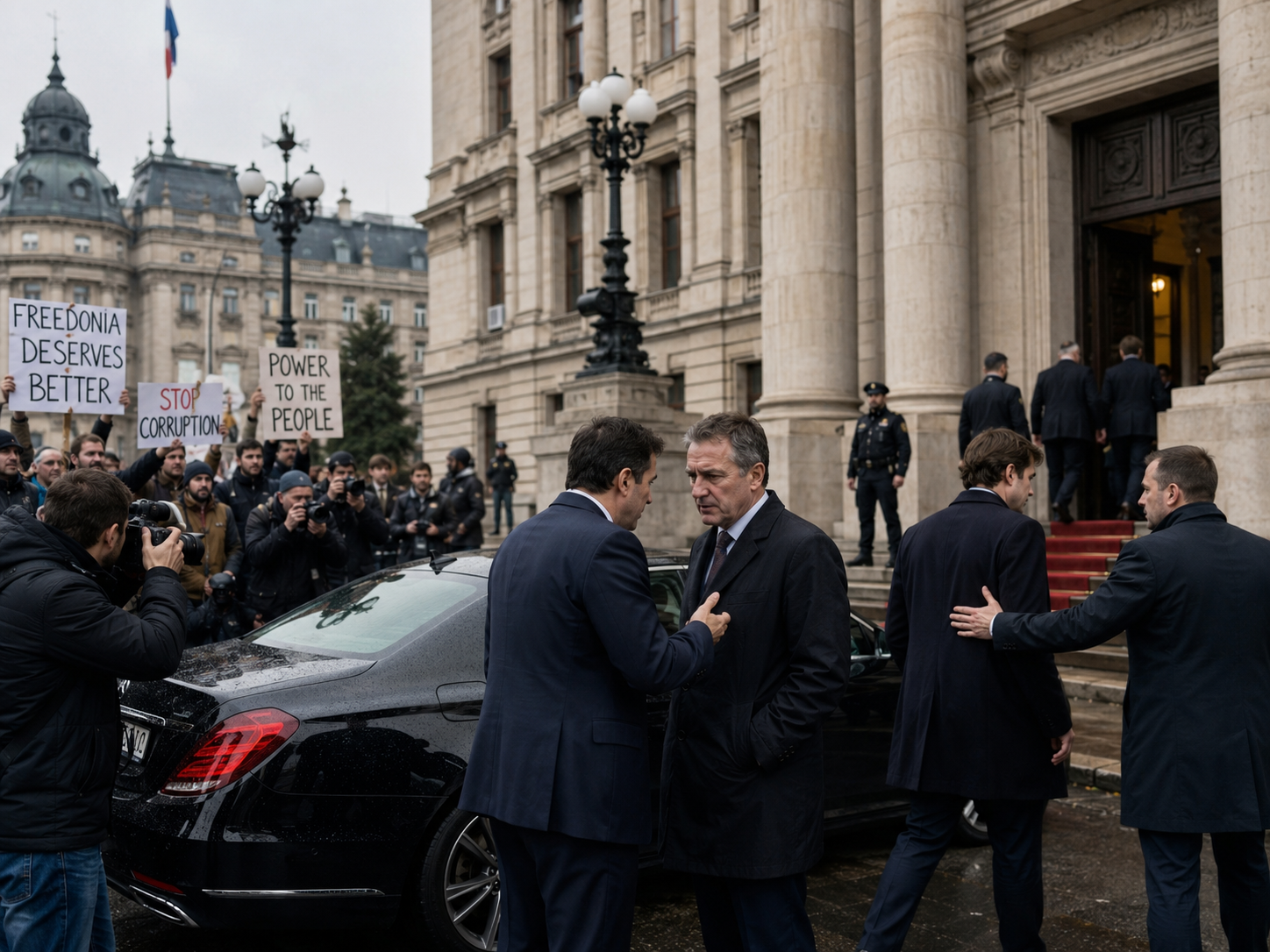
Freedonia’s political landscape is entering one of its most turbulent periods in recent years, as public confidence in government institutions continues to erode amid growing suspicions of corruption, nepotism, and elite self-dealing.
The government, elected on a platform of transparency and economic renewal, now finds itself under increasing pressure from opposition parties, civil society groups, and independent media outlets. At the centre of the controversy are allegations that major public contracts, urban development permits, and senior administrative appointments are being steered toward politically connected families, business allies, and loyal party figures.
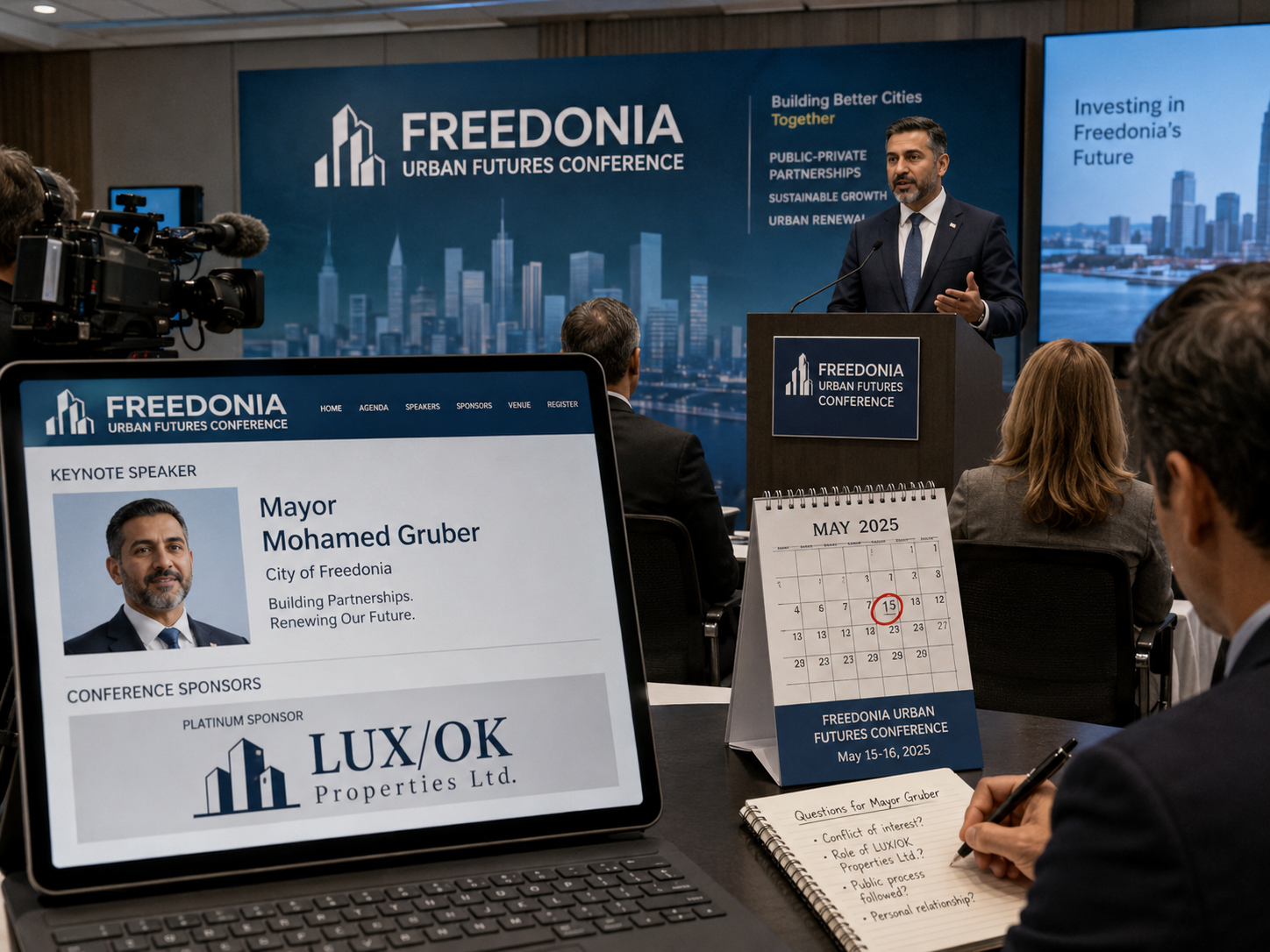
Although no senior official has yet been convicted of wrongdoing, the pattern has become difficult to ignore. Several large infrastructure and property-development projects have reportedly been awarded to companies with close ties to ministers, mayoral offices, or relatives of senior politicians. In some cases, opposition lawmakers claim that firms with little previous experience have won high-value contracts after making donations to political foundations or sponsoring public events associated with ruling-party figures.
One of the most sensitive issues concerns urban planning. Recent zoning changes in several municipalities have triggered public anger, especially where green spaces or public land have been reclassified for commercial development. Critics argue that these decisions appear to benefit a small group of developers with privileged access to decision-makers. Government officials insist that all planning decisions are lawful and necessary to attract investment, create jobs, and modernise Freedonia’s cities.
The controversy has been sharpened by allegations of nepotism. In the past year, relatives of senior officials have reportedly been appointed to advisory boards, municipal development agencies, state-owned companies, and public procurement committees. While the government describes these appointments as merit-based, critics say they reflect a growing culture in which loyalty and family connections matter more than competence.
Public frustration is also being fuelled by visible displays of wealth among politically connected circles. Luxury cars, private dinners, foreign holidays, and sudden property purchases have attracted attention at a time when many Freedonians are struggling with rising rents, stagnant wages, and deteriorating public services. For many citizens, the contrast between official promises of reform and the apparent enrichment of insiders has become politically explosive.
Civil society organisations are calling for stronger asset-declaration rules, beneficial ownership transparency, and independent oversight of public procurement and zoning decisions. Anti-corruption campaigners argue that Freedonia’s institutions remain too vulnerable to informal influence, especially where business interests, party financing, and local government decision-making overlap.
The opposition has demanded a parliamentary inquiry into recent development approvals and public contracts. Some opposition leaders have gone further, accusing the ruling party of building what they describe as a “patronage network” linking developers, ministers, mayors, consultants, and political donors. The government has dismissed these claims as politically motivated, arguing that the opposition is trying to obstruct investment and undermine public confidence.
Yet the pressure is unlikely to disappear. Independent journalists have begun piecing together corporate records, property transactions, campaign donations, and leaked municipal documents. Their reporting suggests that the real issue may not be one isolated scandal, but a broader system of influence in which access to power creates private economic opportunity.
For Freedonia, the political stakes are high. If the government can credibly investigate the allegations, strengthen oversight, and hold wrongdoers accountable, it may yet restore public trust. If it fails, suspicions of corruption and nepotism could harden into a wider legitimacy crisis.
For now, Freedonia remains a country where formal democratic institutions continue to function, but where many citizens increasingly believe that political power is being used for private advantage. The coming months will test whether the system is capable of correcting itself—or whether the appearance of impunity will become the defining feature of Freedonian politics.
Where is our money at?
Freedonia’s Corruption Crisis